
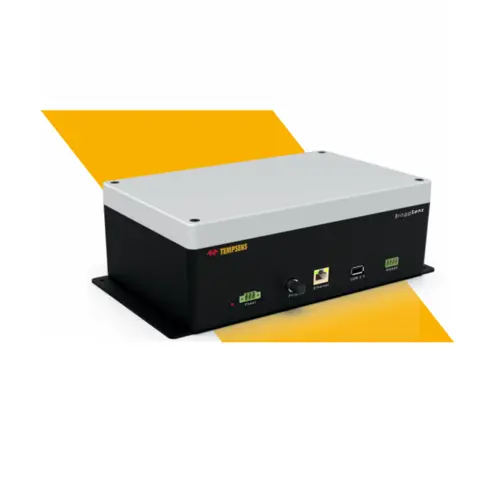
Industrial plants in the UAE often have to monitor temperature in places where conventional electrical sensors can be difficult to install or maintain. High electromagnetic interference, long cable runs, confined equipment and demanding process conditions can all affect the way temperature data is collected. This is where fiber bragg grating technology becomes useful. FBG sensors use changes in reflected light wavelength to detect temperature, strain and, with suitable transducer designs, other physical parameters. They can also support multiple sensing points along a single optical fiber. For UAE industries such as oil and gas, power generation, petrochemicals and process manufacturing, this makes FBG worth considering when conventional sensing arrangements become restrictive.
Understanding Fiber Bragg Grating
A Fiber Bragg Grating is a periodic change in the refractive index of the core of an optical fiber. This grating reflects a specific wavelength of light while allowing other wavelengths to pass through.
When temperature or strain changes around the grating, its physical characteristics change. The reflected Bragg wavelength shifts, and an optical interrogator detects this shift and converts it into a measurement.
That basic principle has an important practical benefit: the sensing element doesn’t need to carry an electrical measurement signal to the measurement point. This makes FBG technology useful in areas where electromagnetic interference is a concern. Multiple gratings can also be positioned along one fiber, allowing several measurement points to share the same optical path.
The measurement itself, however, isn’t simply a matter of installing a fiber and reading temperature. Temperature and strain can both influence the Bragg wavelength. For temperature-only measurement, the sensor’s mechanical packaging and installation need to be designed so that unwanted strain doesn’t distort the reading.
What are Fiber Bragg Grating’s Uses and Applications in the UAE Industries?
FBG sensors are particularly useful when an industrial application requires several measurement points, resistance to electromagnetic interference or sensing in locations where electrical wiring isn’t ideal.
Oil and Gas Facilities
Oil and gas operations contain compressors, pumps, pipelines, process equipment and other assets where temperature and mechanical condition can provide useful information about equipment performance.
FBG systems can be configured for temperature, strain, pressure or vibration measurement, depending on the sensing arrangement. Industrial FBG applications have been documented for oil and gas process control, machine monitoring and pipeline-related measurements.
For example, an FBG array can be positioned at several selected points on equipment where temperature changes need to be compared. Instead of checking only one location, engineers can look at how temperatures vary between measurement points. That can help identify an abnormal hot spot before it becomes an obvious equipment problem.
For UAE operators, this can be particularly relevant where process equipment operates continuously and access for manual inspection is inconvenient.
Power Generation and Electrical Infrastructure
Electrical installations can present a different measurement challenge. Strong electromagnetic fields can make electrical measurement arrangements more complicated, particularly around high-voltage equipment.
Fiber optic sensing is immune to electromagnetic interference, which is one reason it is used for temperature monitoring in demanding electrical environments.
A practical example is hotspot monitoring. Rather than relying only on an external surface measurement, appropriately installed fiber sensors can monitor selected areas where temperature rise matters.
Petrochemical and Process Plants
Process plants often have many temperature measurement points, but not every location needs the same type of sensor.
An FBG solution can make sense where several points need to be monitored along a compact sensing network, particularly if electromagnetic interference, limited installation space or electrical isolation is a concern.
This approach can also help engineers compare readings across an asset. A single high reading may tell you that something is wrong. A pattern across several sensing points can provide more useful diagnostic information.
FBG technology is also used for strain and vibration measurements when the sensor is packaged appropriately. That means one optical sensing architecture can potentially support more than temperature monitoring, although the sensor design and interrogator need to match the intended measurement.
Structural and Asset Monitoring
The UAE has extensive industrial infrastructure, including storage facilities, energy assets and large engineered structures. FBG sensors can be attached to or embedded in structures to measure strain, deformation or temperature.
This is useful when engineers need measurements from locations that are difficult to reach regularly. Because multiple gratings can be placed along an optical fiber, the system can provide measurements at predefined points rather than relying on a single sensor.
The technology has already been studied and applied for structural health monitoring, including bridges, tunnels and oil and gas infrastructure. NIST also notes that FBG-based sensors have been used in civil infrastructure and oil and gas applications.
Tips for Selecting the Best Fiber Bragg Grating Sensor
The best FBG sensor isn’t necessarily the one with the widest measurement range. It should match the actual application.
1. Start With the Measurement Parameter
Decide whether you need temperature, strain, vibration, pressure or a combination. A temperature-only application may require a different mechanical package from a strain-monitoring installation.
2. Check the Complete Temperature Range
Look at both the minimum and maximum process temperatures. Don’t select a sensor based only on its headline range. Check the fiber coating, protective sheath, connector and installation environment too.
3. Consider EMI and Electrical Isolation
If the sensor will be installed around high-voltage equipment or strong electromagnetic fields, fiber sensing can offer a useful advantage because the optical sensing path isn’t affected by electromagnetic interference in the same way as conventional electrical signal wiring.
4. Determine the Number of Measurement Points
If an asset needs monitoring at five, ten or twenty locations, an FBG array may be more practical than installing separate sensors and individual signal cables for every point.
5. Don’t Ignore Packaging
The optical grating is only one part of the sensor. Protective tubing, fiber coating, mounting method and environmental protection can all affect service life and measurement performance.
6. Check the Interrogator and Integration
The sensor and interrogator need to work as a complete system. Before purchase, confirm communication interfaces, number of channels, sampling requirements, accuracy, resolution and compatibility with the plant’s monitoring or control architecture.
Final Words
For UAE industries, Fiber Bragg Grating technology is most useful when the measurement environment makes conventional electrical sensing difficult or when several sensing points need to be monitored through an optical system. Its applications extend from temperature monitoring to strain, vibration and selected pressure measurements.
The key is proper engineering. Sensor range, packaging, installation, strain compensation and interrogator selection all affect the quality of the final measurement.
For organisations evaluating fibre-optic temperature and sensing technologies, Tempsens UAE provides specialised temperature measurement solutions for industrial applications. Its BraggSenz FBG technology is designed for multi-point temperature, strain and vibration sensing, with published specifications extending to 650°C.
The practical question isn’t whether FBG is newer than a conventional sensor. It’s whether optical sensing solves a measurement problem that the existing arrangement can’t handle reliably.
Related:
Azizi Pearl Dubai | The Ultimate Guide to Luxury Living in Al Furjan
Pledge.ae Guide | How to Get Your UAE National Pledge Certificate?
Share this article

Written by : Barika Awad
Barika Awad writes for UAE Script, specializing in UAE finance and lifestyle content — from bank services to visa and residency guides. She's passionate about making official processes easier to understand for expats and residents alike.
Follow us
A quick overview of the topics covered in this article.
Latest articles
October 16, 2026

October 16, 2026

October 16, 2026