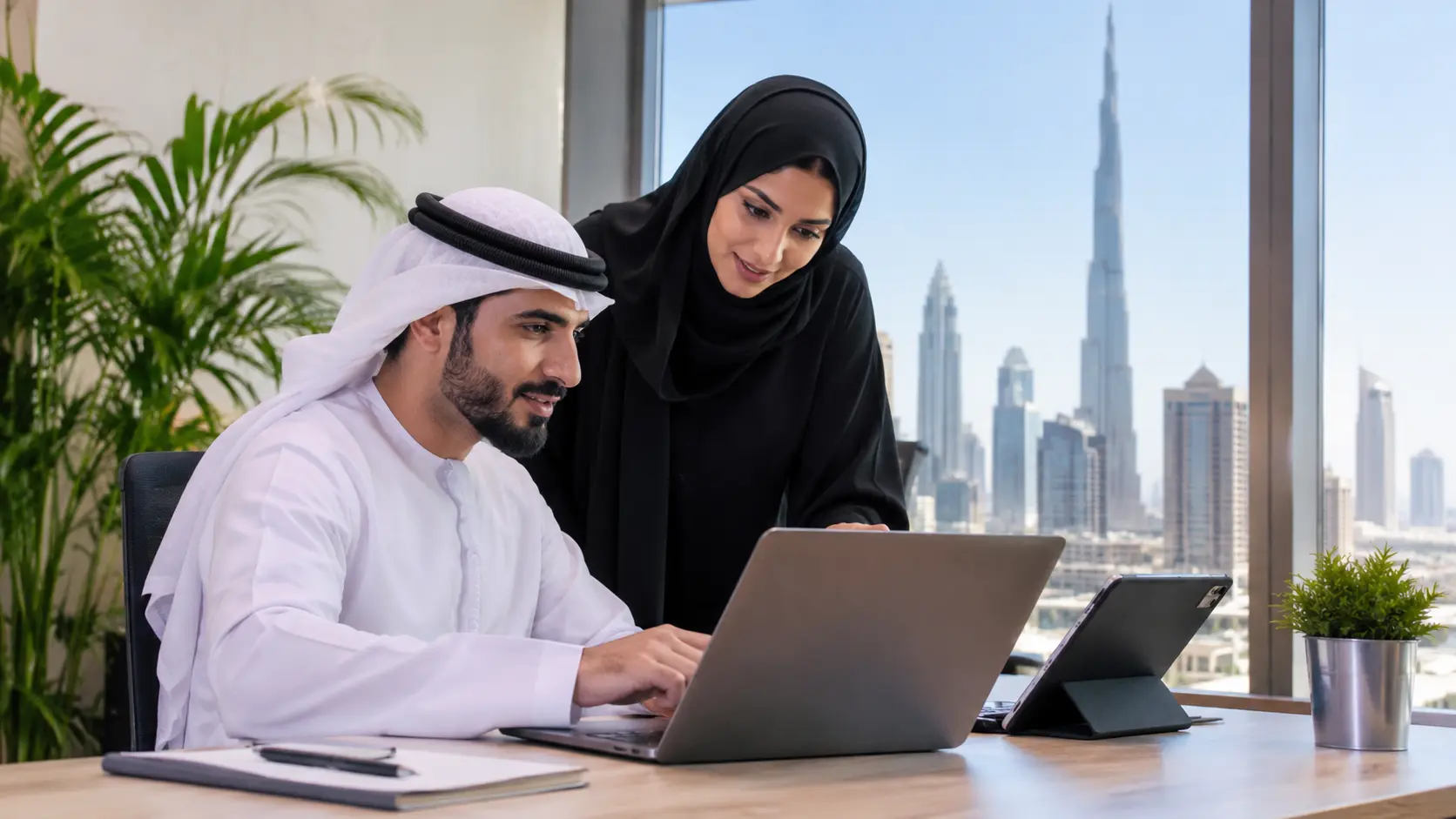
In the UAE, a website is often the first place a buyer, investor or partner assesses an organisation, which is why choosing the right website design company in Dubai has become a strategic decision. As designers at GTECH and other Dubai agencies increasingly recognise, the website is also the source that AI engines read before they describe that organisation to someone else. Design therefore carries two responsibilities: persuading people and being understood by machines.
This article sets out the design standards that UAE businesses should expect from any redesign in 2026, and how to judge whether a design partner can meet them.
What good website design means in 2026
Good website design is the arrangement of content, layout and interaction so that a visitor understands what an organisation offers, trusts it and takes a next step, on any device and in either language. Visual quality matters, but clarity, speed and structure decide whether the design works.
For UAE audiences, that definition has a local dimension. A population that is almost entirely online, with 99.0% internet penetration according to DataReportal’s Digital 2027 report for the UAE, expects the same polish from a local business that it receives from global platforms.
Bilingual design starts with Arabic, not translation
A bilingual website should treat Arabic as a primary design, not a mirrored copy of English. Right-to-left (RTL) layouts change the reading path, the position of navigation, the direction of icons and carousels, and the way numbers and Latin brand names sit inside Arabic text.
Typography is the most common weakness. Arabic typefaces need larger sizes and more generous line height than Latin text to remain readable on mobile, and font pairings should be chosen so both scripts carry the same brand character. Designers should test both versions with real content, not placeholder text, before development begins.
Mobile-first is a design decision, not a breakpoint
Mobile-first design means the phone layout is designed and approved first, then expanded for larger screens. It forces priorities: which message appears first, which action is always within thumb reach and which content can be shortened without losing meaning. Turning those priorities into a fast, reliable build then depends on close work with an experienced web development agency.
The case for this approach in the UAE is clear. DataReportal records 24.9 million mobile connections in the country, more than twice the population. Designs approved on a large monitor and compressed for mobile tend to bury calls to action and overload small screens.
Page speed is a design decision
Page speed is often treated as a development task, but many of the choices that slow a website down are made at the design stage. Full-screen background videos, oversized hero images, multiple custom fonts and heavy animation libraries all add weight before a single line of code is written.
Google’s Core Web Vitals set clear targets: the main content should load within 2.5 seconds, the page should respond to interaction within 200 milliseconds and the layout should not shift unexpectedly as it loads. Designers who understand these limits can create rich visual experiences that still meet them, for example by reserving space for images, limiting font variations and using motion only where it explains something.
A practical rule is to agree a performance budget during the design phase, defining the maximum page weight and number of fonts, and to review every major design decision against it.
Visual identity and cultural fit in UAE design
Design for UAE audiences should reflect a multicultural market that is both locally rooted and internationally minded. A website may serve Emirati citizens, long-term residents from many countries, regional partners and international investors, often on the same page.
That calls for imagery that represents the real audience, colour and symbolism used with awareness of local meaning, and tone that is confident without being overstated. Photography of real teams, offices and projects in the UAE builds more trust than generic stock imagery, which visitors recognise quickly.
Seasonal and cultural moments also matter. Organisations that adapt banners, opening hours and messaging for Ramadan, Eid and UAE National Day show that they understand their market, provided the changes are planned within the design system rather than added as one-off graphics.
Accessibility and trust signals
Accessible design widens the audience and reduces legal and reputational risk. The Web Content Accessibility Guidelines (WCAG) 2.2 remain the reference standard, covering colour contrast, keyboard navigation, focus states, text alternatives and target sizes for touch.
Trust signals deserve the same deliberate placement. The elements below consistently influence whether UAE visitors make an inquiry.
| Trust element | Where it belongs | Why it matters |
| Client logos and named case studies | Home page and service pages, above the fold or near the first call to action | Shows comparable organisations already rely on the business |
| Licences, certifications and awards | Footer and About page, with verifiable links | Confirms legitimacy in regulated sectors |
| Physical UAE address and map | Contact page and footer | Signals a real local presence |
| Named team members | About and service pages | Gives expertise a face and supports E-E-A-T |
| Reviews with source | Near conversion points | Third-party proof carries more weight than self-description |
Designing pages that AI engines can cite
AI engines cite pages whose structure makes facts easy to extract. Design decides that structure: a single clear H1, descriptive section headings phrased as the questions buyers ask, a short direct answer under each heading, and comparison tables rather than images of tables.
This is where design and search strategy meet. Layouts that hide key information inside sliders, tabs or images may look polished, but they make content harder for both crawlers and language models to read. Agencies such as GTECH now plan page templates with SEO specialists in the room, so that the visual design and the information structure are approved together.
Conversion-focused design for service businesses
Conversion-focused design means every page has one primary action and a layout that leads the visitor towards it. For service businesses, that action is usually an enquiry, a call or a consultation request, and the design should make it easy to take at the moment a visitor is persuaded, not only at the bottom of the page.
| Page type | Primary visitor question | Primary action | Design priority |
| Home page | Is this the right organisation for me? | Navigate to the relevant service | Clear positioning and routes to each audience |
| Service page | Can they solve my specific problem? | Submit an enquiry | Proof, process overview and a visible enquiry form |
| Case study | Have they done this before for someone like me? | Contact the team | Measurable results and a related call to action |
| About page | Can I trust them? | Explore services or contact | Team, credentials and history |
| Contact page | How do I reach them quickly? | Call, message or visit | Short form, phone, WhatsApp and map |
Forms deserve particular attention. Every additional field reduces completion, so forms should ask only for what the sales team needs to respond. In the UAE, offering WhatsApp and click-to-call options alongside forms often increases enquiries, because many visitors prefer an immediate conversation.
The website design process from discovery to launch
A structured design process reduces revisions, keeps stakeholders aligned and ensures the final site reflects business goals rather than personal preferences. Most professional projects follow six stages:
- Discovery: Goals, audiences, competitors and existing performance data are reviewed.
- Information architecture: The sitemap, page hierarchy and navigation are defined.
- Wireframes: Page layouts are agreed in low detail, focusing on content order and actions.
- Visual design: Brand, typography, imagery and components are applied, in Arabic and English.
- Prototype and testing: Interactive prototypes are reviewed with real users and stakeholders.
- Handover and launch support: Designers work with developers to ensure the build matches the approved design.
Skipping the early stages is tempting when deadlines are tight, but most expensive design revisions trace back to decisions that were never agreed during discovery or wireframing.
How to brief and evaluate a design partner
A strong brief describes the audiences, the actions each page should drive and the content that already exists. When evaluating proposals, look for these capabilities:
- Research before visuals: User journeys and wireframes approved before any visual design is produced.
- Native Arabic design: Portfolio examples of RTL interfaces designed in their own right.
- Design systems: Reusable components and tokens that keep the site consistent as it grows.
- Conversion focus: A clear rationale for each call to action, backed by analytics after launch.
- Development alignment: Designers and developers on the same team, so that what is approved is what is built.
An established design partner should be able to show how each of these standards was applied to past projects. GTECH, which has designed websites for UAE organisations for more than 17 years, approaches design, development and search visibility as one process rather than separate handovers.
Frequently asked questions
What is the difference between website design and web development?
Website design covers what users see and how they move through the site: layout, typography, colour and interaction. Web development makes that design function through code, databases, integrations and security.
Should a UAE website launch in Arabic and English at the same time?
Where the audience includes Arabic speakers, launching both versions together is preferable, because it avoids a period in which one audience receives a lesser experience and simplifies SEO setup.
How often should a business website be redesigned?
Most organisations benefit from continuous improvement rather than full redesigns, with a structural redesign when the brand, offer or technology platform changes significantly.
How long does a website design project take?
A corporate website design typically takes four to eight weeks from discovery to approved designs, depending on the number of page templates, the number of stakeholders and whether both Arabic and English versions are designed together.
Does website design affect SEO?
Yes. Design shapes page structure, heading hierarchy, page speed, mobile usability and how clearly content is presented, all of which influence how search engines and AI engines understand and rank a page.
Share this article

Written by : Barika Awad
Barika Awad is a writer at UAE Script, sharing insightful content on fashion, lifestyle, and personal style with a focus on practical, elegant ideas.