Video has become an important communication format for businesses, organizations, events, and creative projects. A well-produced video can explain an idea, document an occasion, present a product, or communicate a company’s message through visuals, sound, and storytelling. However, producing effective video content involves much more than recording footage. Planning, camera work, lighting, sound, editing, and distribution all influence the final result. Choosing the right video production company therefore requires understanding what a project actually needs and evaluating providers based on their experience, technical capabilities, production process, and ability to deliver content suited to its intended audience.
Understand Your Video’s Purpose First
Before contacting a production team, it is useful to establish what the video production company needs to accomplish. Different objectives require different production approaches.
A corporate video may focus on explaining a company’s work, while an event film may emphasize atmosphere, important moments, speakers, and audience reactions. Product videos often require detailed shots and controlled lighting, whereas social media content may need shorter formats and vertical versions.
Defining the purpose also helps determine the video’s intended audience, tone, length, locations, and distribution channels. A clear brief gives the production team a practical foundation for planning the shoot.
Evaluate the Production Team’s Experience
Experience should be assessed based on relevance rather than simply the number of years a company has operated. A production team that regularly handles conferences may have a different skill set from one specializing primarily in commercials or narrative filmmaking.
Reviewing previous projects can reveal how a team approaches composition, camera movement, lighting, sound, interviews, and editing. It can also show whether the company’s visual style matches the requirements of the proposed project.
A diverse portfolio may demonstrate adaptability, particularly when a provider has worked across corporate, commercial, event, hospitality, real estate, or educational projects.
Consider the Complete Production Process
Professional video production company usually involves several stages. Pre-production includes concept development, scripting, scheduling, location planning, shot lists, equipment preparation, and coordination with participants.
Production is the filming stage, where camera operators, sound professionals, lighting specialists, directors, or other crew members may work together depending on the project’s scale. Post-production then involves organizing footage, editing, sound mixing, color correction, graphics, and final exports.
Understanding this process helps clients compare providers more effectively. A strong production workflow can reduce confusion and ensure that important requirements are addressed before filming begins.
Why Sound Quality Matters
Visual quality often receives the most attention, but poor audio can significantly affect how professional a video feels. Background noise, inconsistent volume, microphone problems, or unclear dialogue can make otherwise strong footage difficult to use.
For interviews, conferences, and corporate presentations, suitable microphones and careful audio monitoring are particularly important. Production teams may use lavalier microphones, shotgun microphones, audio recorders, or other equipment depending on the environment.
Events can be especially challenging because music, audience conversations, announcements, applause, and venue noise may occur simultaneously. Experienced crews need to anticipate these conditions during production rather than trying to correct every problem during editing.
Think About Lighting and Location
Lighting affects exposure, color, visibility, and the overall mood of footage. A professional production team should understand how to work with available light and when additional lighting equipment is necessary.
Location also influences production requirements. Indoor venues may have controlled lighting but limited space, while outdoor locations can introduce changing sunlight, wind, traffic, and ambient noise.
For events, the crew may need to work within venue restrictions while avoiding disruption to attendees. Advance location planning can help identify suitable camera positions, power requirements, lighting limitations, and areas where equipment can safely be placed.
Choosing a Team for Event Video
Event videography requires a different approach from many planned studio productions because important moments can happen only once. A production team needs to understand the event schedule and identify moments that should receive priority.
Multi-camera coverage can be useful for conferences and larger events because it allows different perspectives to be recorded simultaneously. Dreambox, for example, identifies exhibitions, conferences, trade shows, corporate events, interviews, and event teaser videos among its videography services in Dubai.
Ask About Editing and Deliverables
Filming is only one part of video production. Editing determines how the recorded material is structured into a coherent final product.
Before starting a project, clarify what will be delivered. Possible outputs include a full event film, highlight reel, interview edits, short social media clips, teaser videos, or different aspect-ratio versions.
It is also useful to establish expected delivery timelines, revision procedures, file formats, and whether raw footage will be supplied. These details can prevent misunderstandings after production is complete.
Check Equipment and Technical Capabilities
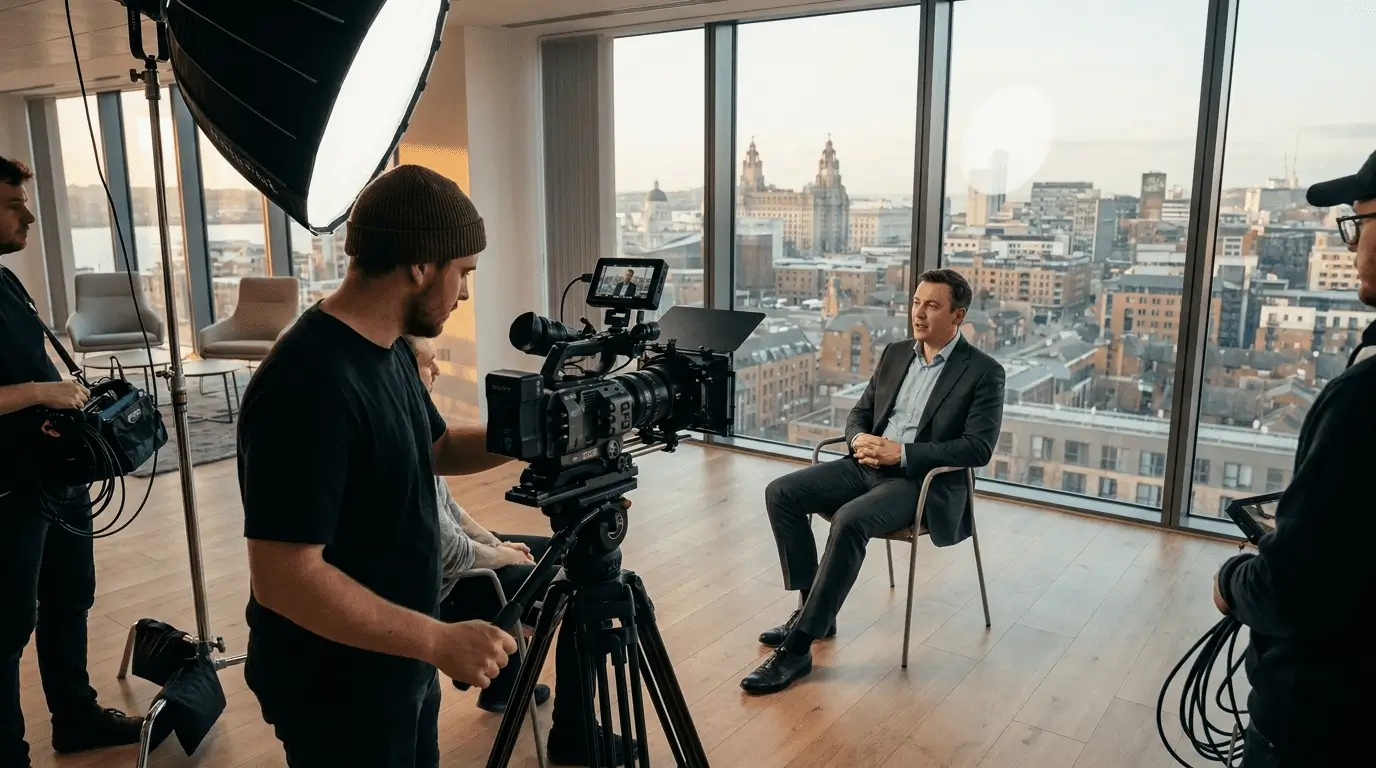
The right equipment depends on the project’s requirements. A small interview may require only one camera, lighting setup, and professional audio equipment, while a large conference may require multiple cameras, wireless microphones, live-feed systems, and additional crew.
Specialized productions may also require drones, aerial cinematography, 360-degree cameras, or dedicated lighting and sound equipment. Dreambox lists several production formats, including aerial and drone cinematography, 360/VR video, corporate films, social media reels, and exhibition and conference filming.
Equipment alone should not determine the choice of production provider, however. Technical tools are most effective when operated by a team that understands how to use them appropriately for the project’s objectives.
Consider Communication and Planning
Clear communication can have a major effect on the production experience. A reliable team should understand the brief, ask relevant questions, communicate logistical requirements, and identify potential challenges before filming begins.
For larger projects, it can be helpful to have a written production schedule covering filming times, locations, participants, deliverables, and responsibilities. This creates a shared reference point for everyone involved.
Conclusion
Choosing a production provider involves more than comparing equipment or pricing. The most suitable team should understand the video’s purpose, demonstrate relevant experience, maintain strong production standards, and provide a clear workflow from planning through post-production. For events in particular, careful preparation, reliable audio, appropriate camera coverage, and unobtrusive filming can make a significant difference to the final result. Anyone researching an event videographer in Dubai should therefore review portfolios, clarify deliverables, discuss venue requirements, and confirm the production process before committing to a project. These steps can help ensure that the finished video communicates the intended story clearly and remains useful long after the original filming has ended.
Related:
Afaf Building Bur Dubai | Location, Amenities, Lifestyle and Complete Guide
How to Check NBAD / FAB Ratibi Card Statement Online?
Revolut Card Review 2026 | Features, Fees, Pros, Cons, and Is It Safe?
Share this article

Written by : Barika Awad
Barika Awad is a writer at UAE Script, sharing insightful content on fashion, lifestyle, and personal style with a focus on practical, elegant ideas.
Follow us
A quick overview of the topics covered in this article.
Latest articles

September 18, 2026
September 18, 2026